After the US Announced an Agreement to Terminate The Iran War | Oil Prices Fell
By 08:56 GMT on Wednesday, May 6, 2026, Brent crude oil futures had dropped $6.70, or 6.1%, to $103.17 a barrel, a significant one-day decline of $6.70 (6.1%).
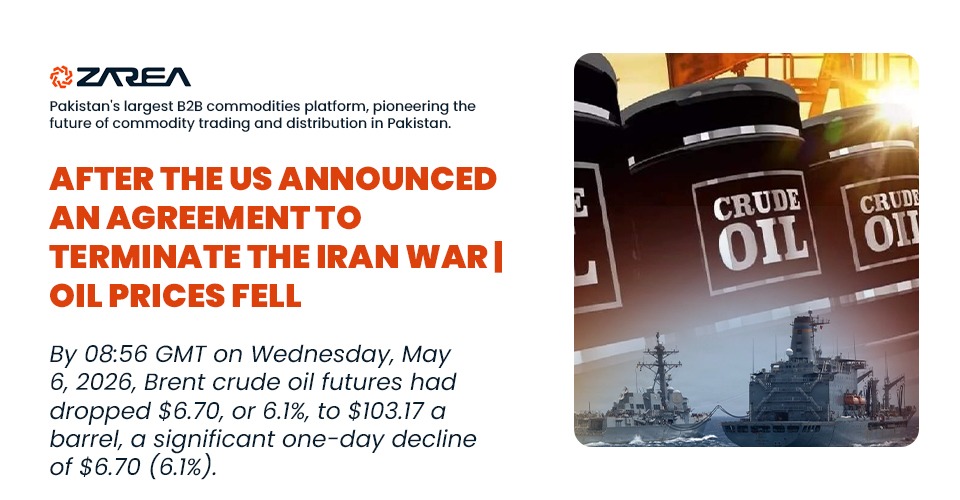
Brent crude futures dropped $6.70, or 6.1%, to $103.17 a barrel:
After Axios revealed that Washington thought it was nearing a one-page framework agreement with Iran to end the conflict, oil prices continued their downward trend on Wednesday, falling to two-week lows.
After reaching their lowest level in over two weeks, Brent oil futures dropped $6.70, or 6.1%, to $103.17 per barrel at 0856 GMT. At $95.50, U.S. West Texas Intermediate dropped $6.77, or 6.6%.
After losing over 4% in the previous session, both benchmarks were on course for their largest daily drops in both percentage and absolute terms since mid-April.
Us Statement About crucial issues:
According to Axios, the United States anticipates Iranian comments on a number of crucial issues within the next 48 hours. The report stated that this was the closest the sides had been to an agreement since the start of the war, even if nothing has been agreed upon yet.
Iran had previously stated that it would only accept a comprehensive and equitable deal.
In an attempt to assist stalled ships in escaping the Strait of Hormuz, the U.S. Navy said on Monday that it had destroyed a number of Iranian small boats.
Read More: Oil Falls More Than $1 on Higher Flows
Key Market Reactions (May 6, 2026):
Reports that the United States and Iran are getting close to a "one-page framework deal" to end the regional conflict caused the decline. Additionally, the Strait of Hormuz will reopen as a result.
1) Brent Crude: During morning trading, it reached a two-week low of $103.17. Prices continued to decline throughout later intraday trade. But when hopes for a truce increased, it momentarily fell below $100.
2) WTI Crude: At $95.50, the U.S. West Texas Intermediate dropped $6.77 (6.6%).
3) Context: Just last week, there was a notable period of volatility that preceded this collapse. Brent, meanwhile, hit its highest point since March 2022. because the Strait of Hormuz has been closed since February.
In order to complete the details of the possible deal, the market is presently expecting a response from Tehran within a 48-hour timeframe.
The Blockade on Strait of Hormuz:
Brent traded at its highest level since March 2022 last week because to the losses in crude oil supplies caused by the suspension of naval traffic in the strait since the war started in February.
Global oil and gasoline stockpiles have decreased as a result of the Strait of Hormuz shutdown as refineries attempt to make up for output shortages.
According to market sources on Tuesday, which cited data from the American Petroleum Institute, U.S. crude oil stockpiles dropped for a third week, along with gasoline and distillate supplies.
Crude Supply News:
According to the sources, crude supplies decreased by 8.1 million barrels in the week ending May 1. According to the sources, distillate stockpiles decreased by 4.6 million barrels and gasoline inventories decreased by 6.1 million barrels from the previous week.
At 1430 GMT, official figures from the U.S. Department of Energy's statistical division, the EIA, are expected.
Brent crude futures:
At the moment, Brent crude futures are trading close to $84.50 a barrel. This is due to a high-stakes confrontation over the Strait of Hormuz that is plaguing the world energy market. There has been opposition to ongoing talks to reopen the crucial canal. Consequently, a temporary price decline observed when a resolution seemed imminent was reversed.
Mitigating the Strait of Hormuz Standoff:
As traders keep an eye on diplomatic attempts, energy prices continue to be quite volatile.
1) Iran Demands Concessions: Tehran maintains that the United States must make significant concessions before it can restore shipping lines. Passage along the road is still strictly restricted by the Iranian Revolutionary Guard Corps.
2) Oman's Mediation Role: As Oman and Iran collaborated to establish new, safer marine trading channels, hopes first increased. However, unimpeded economic access is still a need for the United States to withdraw its naval embargo.
3) Severe Export Reductions: Since late February, when the embargo started. Thus, a significant worldwide fuel crisis has resulted from a 54% collapse in the overall export volumes from economies that rely on Hormuz.
Final Thoughts:
The ongoing blockage of the Strait of Hormuz has left the world crude oil market in a high-stakes impasse. Because worldwide inventories are being depleted and structural supply problems are being caused by this closure. However, China's growing dependence on electric cars and its own reserves has kept oil prices from hitting triple digits. For this reason, the outcome of the discussions between the United States and Iran will determine the short-term course.
Reuters: Oil prices settle 5% lower