Biogas Energy | Turning Waste into a Powerful Renewable Resource
Discover how biogas energy transforms organic waste into clean, renewable power. Learn how this sustainable fuel reduces emissions and creates a greener future.
Biogas Energy - A Useful Source of Clean Energy:
The globe is looking for more sustainable and clean methods to fulfill its expanding energy needs. For decades, however, one option has been subtly demonstrating its value. Yes! it's the Biogas energy. This is limited and contributes substantially to greenhouse gas emissions unlike fossil fuels. As a result, the biogas turns common organic waste into a useful source of clean energy.
From rural fields to contemporary metropolis, biogas energy is assisting communities in reducing trash. It produces clean cooking fuel, energy, and enhances environmental sustainability. More significantly, it poses a crucial query: Can biogas slow down climate change? How this renewable resource absorbs dangerous pollution holds the key to the solution. transforms them into usable energy prior to their entry into the atmosphere.
In this article, we'll explore how biogas works, its environmental benefits, the uses of biogas, and why it could become a major contributor to the world's clean energy future.
What is Biogas Energy?
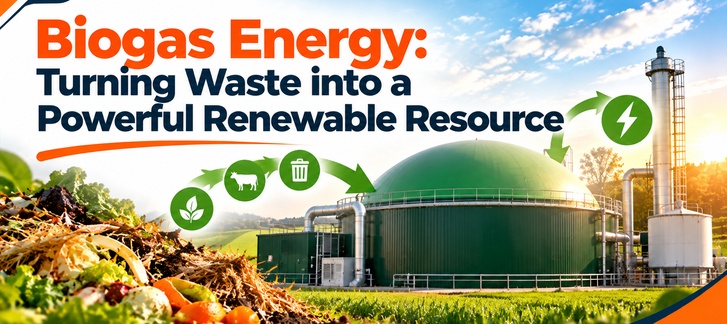
Biogas energy is a renewable energy source produced through the natural decomposition of organic materials in an oxygen-free environment. This process is known as anaerobic digestion.
Organic materials used to produce biogas include:
1) Animal manure
2) Agricultural residues
3) Food waste
4) Kitchen waste
5) Sewage sludge
6) Organic industrial waste
7) Crop leftovers
These compounds are broken down by bacteria. sO, they create a gas mixture that is mostly made up of carbon dioxide (CO₂) and methane (CH₄).
Methane is extremely flammable, but after being purified, it becomes a great fuel for generating energy, heat, and even transportation.
instead than letting methane leak straight into the atmosphere. a significant cause of global warming. The biogas systems effectively capture and use it.
Read More: The Future of Reneable Energy
How Does Biogas Production Work?
The production process is surprisingly simple but highly effective.
Step 1: Waste Collection
Organic waste is gathered from farms, households and food industries. it also gathered from municipal waste facilities.
Step 2: Anaerobic Digestion
The waste is placed inside an airtight digester. Where naturally occurring microorganisms begin breaking it down.
Step 3: Gas Production
The methane-rich gas accumulates at the top of the digester. Especially during decomposition.
Step 4: Energy Generation
The collected gas from bio fuel can be used directly for cooking or heating. It can also fuel generators that produce electricity.
Step 5: Biofertilizer
The remaining material becomes nutrient-rich organic fertilizer after digestion. That rganic fertilizer improves soil quality.
Nothing goes to waste. As this process making biogas energy one of the most efficient renewable technologies available today.
Can Biogas Reduce Climate Change?
One of the most frequently asked questions is:
Can biogas reduce climate change?
The answer is yes! But in multiple ways.
1) Methane Capture
Methane is approximately 28 times more powerful than carbon dioxide. Especially, when in a trapping heat over a 100-year period.
The decomposing organic waste naturally releases methane into the atmosphere. But it happen without biogas systems.
Further biogas plants also capture this methane and then convert it into usable energy instead.
Thus, this phenomenon significantly reduces greenhouse gas emissions.
2) Replacing Fossil Fuels
Every unit of electricity or heat produced from biogas replaces energy. While this energy might otherwise come from coal, oil, or natural gas.
This reduces carbon emissions. Meanwhile, it also helps countries transition toward renewable energy.
Better Waste Management
Organic waste in landfills also generates the large amounts of methane into the atmoshere.
Thus, biogas facilities divert waste away from landfills. Because it's reducing environmental pollution while generating clean energy.
Sustainable Agriculture
The massive amounts of manure are also produced by livestock farms.
This garbage turns into a source of renewable energy. while also manufacturing superior organic fertilizer, rather than turning into a source of pollution.
Major Uses of Biogas:
Biogas has many applications in both business and household settings. However, biogas is also heavily utilized in the industrial and agricultural sectors.
1) Cooking Fuel
The cooking is one of the oldest and most common uses of biogas.
Because millions of households worldwide use biogas instead of firewood or LPG the other alternatives.
Benefits include:
Cleaner kitchens
Reduced indoor air pollution
Lower fuel costs
Reduced deforestation
2) Electricity Generation
Biogas can power generators that produce electricity for:
Homes
Farms
Factories
Rural communities
Commercial buildings
Large-scale biogas plants can even supply electricity to national power grids, also.
3) Heating
Industries often use biogas heating process for:
Steam production
Industrial heating
Water heating
Drying agricultural products
This method lowers fuel expenses. While it's also reducing emissions.
4) Transportation Fuel
After purification, biogas becomes biomethane.
Biomethane can fuel:
Buses
Trucks
Passenger vehicles
Agricultural machinery
Several European countries already operate public transportation fleets powered by biomethane.
5) Organic Fertilizer
One overlooked benefit of biogas energy is digestate. This is the nutrient-rich material left after digestion.
Farmers use it as an environmentally friendly fertilizer, because it contains:
Nitrogen
Phosphorus
Potassium
Organic matter
This improves soil fertility while reducing dependence on chemical fertilizers.
Benefits of Biogas Energy:
Renewable
Organic waste is continuously generated everywhere. While it's making biogas a sustainable energy source.
Reduces Waste
When handled wisely, agricultural wastes, manure, and food waste may become valuable resources. rather than burdens on the environment.
Supports Farmers
Farmers gain:
Lower energy costs
Better fertilizer
Additional income opportunities
Improves Public Health
Proper waste treatment reduces:
Water contamination
Bad odors
Disease-causing pathogens
Strengthens Energy Security
Those countries Countries that producing domestic biogas. They reduce dependence especially on imported fossil fuels.
Biogas in Pakistan:
Pakistan also has a enormous untapped potential especially for biogas energy.
While the country's large agricultural sector produces millions of tonnes of organic waste annually.
Potential feedstock includes:
Livestock manure
Sugarcane waste
Rice straw
Wheat residues
Poultry waste
Municipal organic waste
Pakistan has one of Asia's largest opportunities for biogas production. Because it have over 200 million livestock animals.
While many rural households still rely on firewood for cooking.
Small-scale biogas plants could provide:
Affordable cooking fuel
Electricity
Organic fertilizer
Improved sanitation
Challenges Facing Biogas Development:
Despite its benefits, several obstacles remain.
High Initial Investment
1) Building digesters requires for an upfront capital.
2) While government incentives can also encourage wider adoption for biogas plants etc.
Public Awareness
1) Many people remain unfamiliar with the economic and environmental benefits of biogas these days.
2) So, greater awareness can accelerate adoption of biogas.
Infrastructure
1) Large commercial biogas facilitie thes require efficient waste collection. While this facility also require transportation systems.
2) Developing this infrastructure like biogas facility will unlock the significant growth in many fields.
The Future of Biogas:
The future of biogas energy looks increasingly promising, especially in Pakistan.
Governments worldwide are investing in renewable energy to achieve climate goals for better future.
Modern technologies are making biogas plants:
More efficient
Easier to operate
More cost-effective
Better integrated into national energy systems
Artificial Intelligence, smart sensors, and automated monitoring systems are improving biogas plant performance. While biogas plant is also reducing operating costs.
The industries are recognizing that waste is no longer something to discard. At the same time they realizes that it is a valuable energy resource.
As circular economy principles gain momentum. Same as the biogas will play a central role in transforming waste into wealth.
The Bottom Line:
One of the most viable and sustainable renewable energy options still accessible today is biogas energy. It concurrently tackles two worldwide issues. Waste management is the first. On the other hand, the second one produces clean energy.
The answer to can biogas reduce climate change is increasingly clear. This is because it's capturing methane emissions and also replacing fossil fuels. While it's also promoting sustainable agriculture. While biogas contributes significantly in order to reducing greenhouse gas emissions.
The variety of applications for biogas is unique. From transportation and fertilizer production to cooking and electrical generating. It all comes down to demonstrating the adaptability of biogas. The reason for this is that it is a long-term value.
For nations like Pakistan, where livestock and agriculture are the main drivers of the economy. These nations' investments in biogas provide a chance to boost rural development and energy security. Because biogas creates a more sustainable future and lessens pollution in the environment.
Biogas is no longer only a substitute. as the globe shifts to greener energy. It is becoming become a crucial component of the world's renewable energy mix. This is due to the fact that it is demonstrating that waste may turn into one of our most valuable resources.
Sources:
Wikipedia: Biogas
I Maximum: What is Biogas