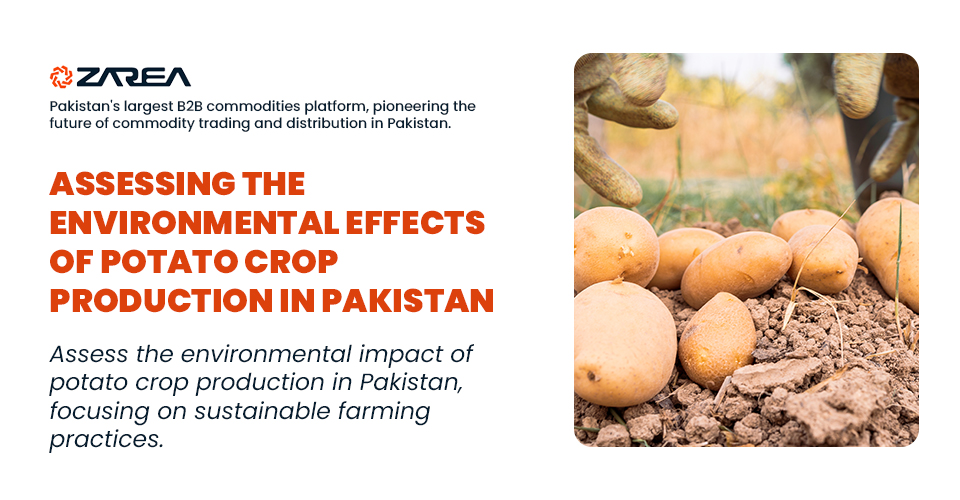
Assessing the Environmental Effects of Potato Crop Production in Pakistan
Assess the environmental impact of potato crop production in Pakistan, focusing on water use, soil health, emissions, and sustainable farming practices.
Introduction: Strategic Importance of the Potato Crop
The potato crop not only maintains a significant position in Pakistan’s agricultural economy, but also in the food system. Meanwhile it's one of the country’s most widely cultivated vegetables. Further potatoes also contribute substantially to food security, rural employment and farm income. Their high caloric yield per hectare, relatively short growing cycle, and adaptability are responsible for diverse agro-climatic zones. Moreover, potatoes' adaptability makes them an attractive option for farmers across all provinces of Pakistan.
However, the increasing scale and intensification of potato farming in Pakistan has raised concerns. So these concerns are about its environmental footprint in Pakistan. On the other hand agriculture faces mounting pressure from climate change. Furthermore water scarcity and soil degradation are the major factors in climate change. But assessing the environmental effects of potato crop production has become an essential part of our environment. In the end potato crop production has developed sustainable farming strategies these days.
Overview of Potato Crop Production in Pakistan
Pakistan ranks among the most notable potato-producing countries in Asia nowadays. Meanwhile Pakistan has an annual potato output that exceeds several million tonnes. However the potato crop is cultivated during both the autumn and spring seasons. Further potatoes also allow for multiple harvests and a steady market supply. Modern production methods increasingly rely on mechanization and chemical fertilizers. Also, pesticides and irrigation maximize yields and meet the domestic demand for potatoes.
Although these practices have improved the productivity of potatoes. Yet this crop has also intensified environmental pressures. Potato crop's environmental impact in Pakistan is closely linked to the input use efficiency of many factors. Regional water availability and farm management practices are closely linked to environmental impact.
Land Use and Biodiversity Impacts
Potato crops are very efficient in terms of land use, compared to many cereal crops. But the potato crop yield is a substantial yield in a small amount of area. This efficiency may be lessened due to the need for agricultural expansion into natural habitats. However, large-scale monocultural potato-growing presents difficulties.
Repetitive potato farming on the same plot of land definitely decreases Pakistan's biodiversity. Although beneficial insect populations and decreased habitat varieties have been disturbed due to monocropping. Yet monocropping also increases pest and disease burdens. Meanwhile, soil organisms and local flora suffer in the harsh environment. When potato cultivation took place, conventional crop rotations have a positive impact. If the land is not managed carefully it has bad impacts. Then potato growth and farming might have hasten soil erosion and lowered long-term land production.
Water Use and Water Pollution Concerns
Water management is one of the most critical environmental issues these days. Meanwhile one of the environmental issues has been associated with potato crop production in Pakistan. Although potatoes have moderate water requirements compared to rice. Yet consistent irrigation is necessary to achieve optimal yields of potatoes. But the over-reliance on groundwater extraction has contributed to the falling water table. Groundwater extraction matters most especially when you talk about water-scarce regions.
Moreover, inefficient irrigation practices in potato fields increase the risk of runoff carrying fertilizers. Further, those inefficient irrigations also impacts pesticides to nearby water bodies. So, inefficient irrigation also contributes to water pollution in the cultivation areas. But eutrophization and the degradation of aquatic ecosystems are also a part of this water pollution. In tube well regions where canal water is supplemented excessive irrigation has also led to soil salinity. Furthermore, soil salinity always threatens crop sustainability.
Greenhouse Gas Emissions and Climate Impact
The environmental footprint of the potato crop includes greenhouse gas emissions primarily from fertilizer application, fuel use in farm machinery, and energy-intensive irrigation systems. Nitrogen-based fertilizers release nitrous oxide, a potent greenhouse gas with a global warming potential significantly higher than carbon dioxide.
While potatoes generally have a lower carbon footprint per kilogram than many animal-based food products, emissions increase substantially when production involves high chemical inputs and long-distance transportation. Cold storage facilities, commonly used in Pakistan to manage seasonal supply fluctuations, further add to energy consumption and emissions.
Fertilizer, Pesticide, and Soil Health Implications
Potato farming requires substantial nutrient inputs, particularly nitrogen, phosphorus, and potassium. In Pakistan, the excessive or unbalanced application of fertilizers has contributed to declining soil health. Over time, this practice reduces soil organic matter, disrupts microbial activity, and increases nutrient leaching.
Pesticide use in the potato crop is another significant concern. Potatoes are vulnerable to pests and diseases such as aphids, blight, and nematodes, leading farmers to rely heavily on chemical controls. While pesticides help protect yields, their misuse poses risks to beneficial insects, soil organisms, and farm workers. Persistent chemical exposure also increases the risk of pest resistance, making long-term crop protection more challenging.
Energy Use and Post-Harvest Processing Impacts
Energy consumption extends beyond the field in potato crop production. Mechanized planting and harvesting, cold storage, transportation, and processing into value-added products such as chips and fries significantly increase energy demand. Cold storage, in particular, represents one of the largest contributors to the crop’s environmental footprint due to prolonged electricity use.
In Pakistan, where energy shortages and reliance on fossil fuels remain prevalent, these energy demands raise concerns about sustainability. Inefficient storage infrastructure and outdated processing technologies further amplify environmental impacts.
Social and Economic Trade-offs
Despite environmental challenges, the potato crop plays a vital socio-economic role in Pakistan. It provides livelihoods for thousands of farmers, laborers, traders, and processors. Potatoes are an affordable and nutritious food source for urban and rural populations alike.
However, smallholder farmers often face rising input costs, price volatility, and exposure to climate-related risks such as heatwaves and erratic rainfall. Environmental degradation linked to intensive potato farming can further undermine farm profitability and rural resilience if not addressed through sustainable practices.
Sustainability Improvements and Best Practices
Improving the environmental performance of the potato crop in Pakistan requires a combination of policy support, farmer education, and technological adoption. Precision agriculture techniques can optimize fertilizer and water use, reducing waste and pollution. Integrated pest management can lower reliance on chemical pesticides while maintaining crop health.
Crop rotation, organic amendments, and conservation tillage can restore soil fertility and biodiversity. Additionally, adopting drip or sprinkler irrigation systems can significantly improve water-use efficiency. Transitioning cold storage and processing facilities toward renewable energy sources would further reduce the sector’s environmental footprint.
Conclusion: Key Takeaways
The potato crop remains a cornerstone of Pakistan’s agricultural and food systems, offering high productivity and economic value. However, its environmental impacts—particularly related to water use, greenhouse gas emissions, soil health, and biodiversity—cannot be overlooked. Without sustainable management, intensive potato production risks undermining the very resources it depends on.
By adopting environmentally responsible farming practices, improving input efficiency, and modernizing post-harvest infrastructure, Pakistan can balance the benefits of potato crop production with long-term environmental sustainability. Such measures are essential to ensuring that the potato continues to support food security, rural livelihoods, and ecological resilience in the years ahead.