How to Choose a Solar Water Pump for Your Farm or Home
Find the best solar water pump for your well, farm, or home. Our guide breaks down submersible vs. surface types, sizing rules, and key benefits.
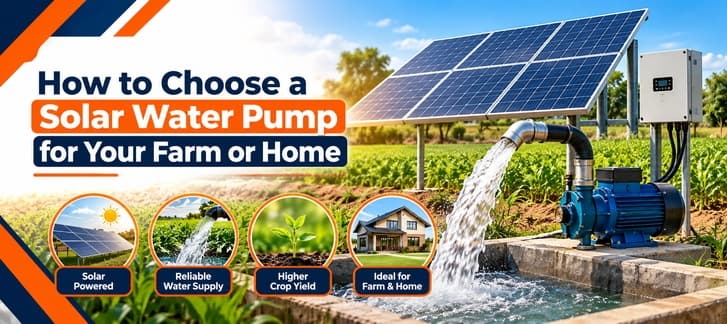
Introduction:
Water is the lifeblood of any thriving property in the world. Whether you are running a commercial farm. Or whether you are managing livestock? Or whether you are setting up a self-sustaining homestead and getting water where it needs it. Where it goes is a daily priority. This means tying yourself to an expensive power grid or dealing with constant noise. Or you have been dealing with fumes and the expense of diesel generators for decades.
Because smart alternative technologies are already taking over today. Solar-powered pump technology has matured into one of the most reliable and cost-effective technologies. While it is also one of the lowest-maintenance utilities available today. But how do you know if a solar water pump is right for you? How do you choose a solar system that matches your specific needs?
Let’s break down everything you need to know about solar pump systems. Because this topic will help you to make an informed decision about your land and your budget.
What Are Solar Water Pumps?
A solar water pump is an electric solar-based water pumping system. Basically photovoltaic (PV) solar panels directly power this system to run. While these systems capture sunlight and convert it into direct current (DC) electricity instead of drawing electricity from utility lines or burning fossil fuels.
A typical setup of a solar pumping system consists of three main components:
1) The Solar Array: These are photovoltaic panels that collect sunlight and then convert it into electrical energy first.
2) The Controller: The controller is the "brain" of this system. Because it regulates the voltage and power output to ensure the pump runs smoothly. Additionally, it protect the system from past clouds that cause power surges or drops.
3) The Pump and Motor: This is the mechanical part of the entire system that physically moves water.
You can choose between a submersible pump (which drops deep underground into a well or borehole) or a surface pump (which sits on dry land and draws from a pond, river, or shallow tank). The pump choice depends on your water source, whatever you want.
You can also check out our post about top solar panels in Pakistan if you curious about them.
The Benefits of Solar Water Pump Technology:
Switching to a solar water pumping system can offer you immediate practical and financial advantages both at the same time. Whether you are a homeowner or an agricultural producer.
1) Eliminating Fuel and Grid Costs
The energy that is required to run this system is completely free once your solar pump is installed. You will no longer have to worry about fluctuating diesel prices. In this way you will forbid the transporting of heavy fuel jugs to remote fields. Finally you also have to stop worrying about paying monthly utility bills to power your well.
2) Extremely Low Maintenance
As you know, diesel engines require regular oil changes and filter replacements. While some engines also require mechanical overhauls. On the other hand solar systems have very few moving parts. A high-quality solar pump can run seamlessly for years without human intervention. Aside from occasionally wiping dust off the panels, they must be cleaned on time.
3) Remote Self-Sufficiency
Trenching wires can cost thousands of dollars per mile for you. If your water source is hundreds of yards long or miles away from the nearest power line. Meanwhile a solar setup operates completely off-grid. Because it allows you to establish reliable water stations in the most remote corners of your property.
4) Perfect Alignment with Nature
Plants and livestock need the most water when the weather is hot and dry. This is exactly when solar panels produce the most electricity which is convenient for you. Therefore, your solar system automatically ramps up production during peak daylight hours. While it's also delivering water when your farm needs it most.
Here you can check out top 10 solar inverters in Pakistan!
The Challenges of Solar Water Pump Technology:
While the advantages are massive, making a smart purchase means looking at the potential hurdles honestly. Solar pumping is highly efficient, but it does require a shift in how you manage your water resources.
1. Higher Upfront Investment
The primary barrier for most buyers is the initial cost. While a diesel or standard AC pump might be cheaper out of the box, you must buy the solar panels and specialized controller upfront. Think of it as prepaying for 10 to 15 years of fuel all at once. The system pays for itself over time, but the initial capital requirement can be steep.
2. Weather Dependency
Solar pumps run when the sun is shining. Output drops on heavily overcast days, and pumping stops entirely at night. To counter this, you cannot rely on "on-demand" pressure systems the way you do with grid power. Instead, successful solar pumping relies on gravity storage. You pump water into an elevated storage tank during peak sunny hours, allowing you to draw from that tank via gravity whenever you need it, day or night.
3. Specialized Sizing
You cannot simply buy a standard pump off the shelf and attach a random solar panel to it. The system must be engineered to match your specific geographic location, daylight hours, well depth, and daily volume needs. An incorrectly sized system will result in dry fields or a stalled motor.
The Role of Government and Private Sector Support:
Because solar pumping reduces carbon emissions and relieves pressure on over-stressed electrical grids, governments and agricultural organizations worldwide actively encourage its adoption.
Depending on your location, you may qualify for substantial financial assistance:
1) Government Grants and Subsidies: Many agricultural departments offer grants that cover a significant percentage of the equipment costs for converting farms to solar power technology.
2) Tax Incentives: Residential homeowners and commercial farmers can frequently claim renewable energy tax credits, instantly lowering the net cost of the installation.
3) Private Sector Financing: Many solar manufacturers and agricultural lenders now offer specialized low-interest financing plans. These allow you to pay off the system using the money you save on fuel and electricity.
Before purchasing any equipment, check with local agricultural extension offices or renewable energy authorities to see what financial aid is currently active in your area.
The Future of Solar Water Pump Technology:
Solar technology is advancing rapidly. The systems being installed today are vastly superior to those built even five years ago, and the future looks incredibly bright for off-grid water management.
We are seeing a major rise in smart solar pumps integrated with Internet of Things (IoT) sensors. Modern setups allow you to monitor your well’s water levels, flow rates, and solar efficiency directly from a smartphone app. If a pump runs dry or encounters a blockage, it can send an alert to your phone and shut down automatically to prevent motor damage.
Furthermore, advancements in motor efficiency mean that newer pumps require fewer solar panels to lift the same volume of water. As panel prices continue to fall and motor technology continues to improve, solar pumping is quickly moving from an alternative option to the global standard.
The Bottom Line:
Choosing a solar water pump comes down to balancing your immediate budget with your long-term operational goals. If you have easy, cheap access to grid power and low water demands, a traditional system might suffice.
However, if you are looking to eliminate recurring fuel costs, insulate your farm from rising utility rates, or bring dependable water to a remote off-grid location, a solar powered pump is an unbeatable investment. By carefully calculating your daily water needs, mapping your physical lift height, and utilizing available subsidies, you can secure a free, clean, and automatic water supply that will serve your property for decades to come.
Frequently Asked Questions (FAQ)
Do solar water pumps work on cloudy days?
Yes, solar water pumps can work on cloudy days, but their performance and water output will be reduced. Modern solar controllers use Maximum Power Point Tracking (MPPT) to maximize whatever sunlight is available. However, because water output drops when it is overcast, it is best to use a storage tank to keep a reserve of water for cloudy periods.
Can a solar water pump run at night?
A standard solar water pump cannot run at night because it requires sunlight to power the solar panels. To get water at night, most systems pump water into an elevated storage tank during the day so it can be distributed using gravity at night. Alternatively, you can connect the system to a solar battery bank, though this increases the overall cost.
How deep can a solar pump pull water from?
High-efficiency submersible solar water pumps can lift water from depths of over 300 meters (1,000 feet). The exact depth depends on the horsepower of the pump motor and the wattage of your solar panel array. Deep well applications require a multi-stage submersible pump rather than a surface pump.
How many solar panels do I need to run a water pump?
Most standard residential or small farm solar pumps require between 2 to 6 solar panels, depending on the pump's horsepower (HP) and voltage. For example, a small 0.5 HP pump typically requires around 300 to 600 watts of solar power, while larger commercial agricultural pumps may require dozens of panels.
How long do solar water pumps last?
A high-quality solar water pump motor typically lasts between 5 to 10 years, while the solar panels themselves are highly durable and can last for 25 years or more. The digital controller generally has a lifespan of 5 to 8 years. Regular maintenance, such as keeping the panels clean and ensuring the pump doesn't run dry, will maximize the system's lifespan.