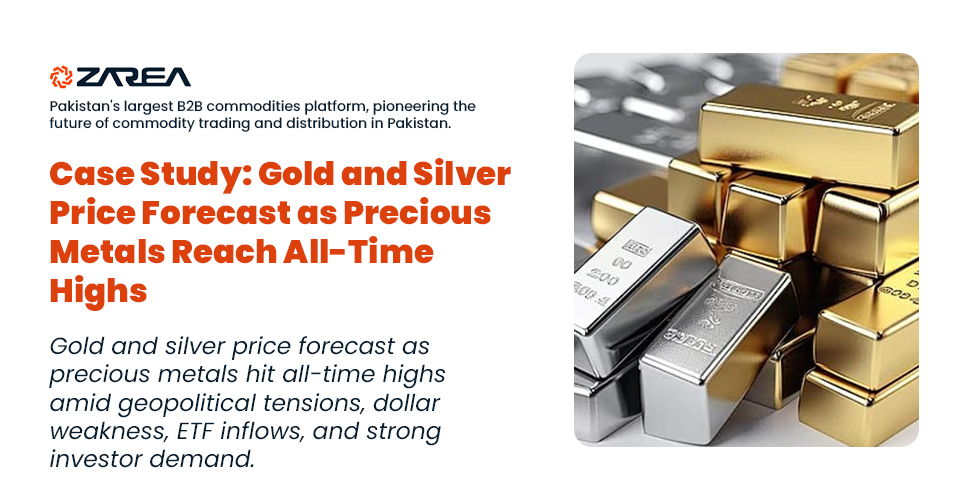
Case Study: Gold and Silver Price Forecast as Precious Metals Reach All-Time Highs
Gold and silver price forecast as precious metals hit all-time highs amid geopolitical tensions, dollar weakness, ETF inflows, and strong investor demand.
Introduction
The market for precious metals saw an unheard-of boom. The reason for this is that the prices of gold and silver have reached all-time highs. This is one of the biggest rallies in decades. This case study investigates the fundamental causes of past price fluctuations. In the meanwhile, it assesses market activity and provides a structured prediction for the price of gold and silver. Additionally, supply-demand, monetary, and geopolitical factors form the basis of this assessment. To determine if current price levels are sustainable, the research takes into account previous market changes. What should politicians and investors expect in the future?
Market Background and Context
At the end of this year, the precious metals market began a period of severe volatility. It's crazy that spot gold has risen above USD 4,540 per ounce. In the meantime, silver is continuing a multi-month surge after surpassing USD 77 per ounce. These circumstances have put both metals in a position to post their best yearly results since 1979.
However, platinum joined these valuable metals as well. It strengthens the precious metals complex's overall strength. This acute appreciation wasn't isolated. Rather, it is a reflection of geopolitical instability coming together. Moreover accommodating monetary policy, US dollar weakness and structural supply restrictions. However, safe-haven investments like gold and silver have historically benefited from these conditions.
Key Drivers Behind the Rally
Geopolitical Tensions and Safe-Haven Demand
At the end of this year, the precious metals market began a period of severe volatility. It's crazy that spot gold has risen above USD 4,540 per ounce. In the meantime, silver is continuing a multi-month surge after surpassing USD 77 per ounce. These circumstances have put both metals in a position to post their best yearly results since 1979. However, platinum joined these valuable metals as well. It strengthens the precious metals complex's overall strength.
This acute appreciation wasn't isolated. Rather, it is a reflection of geopolitical instability coming together. Moreover accommodating monetary policy, US dollar weakness and structural supply restrictions. However, safe-haven investments like gold and silver have historically benefited from these conditions.
US Dollar Weakness
The drop is in the Bloomberg Dollar Spot Index, which dropped by 0.7 percent in only one week. Its worst decline since June, meanwhile, gave it further impetus. International investors find dollar-denominated commodities more appealing when the US currency declines. Additionally, it immediately contributes to rising gold and silver prices. US currency and precious metals have historically had significant negative connections. However, this association was generally strengthened by the more recent surge.
Monetary Policy and Interest Rate Cuts
The potential cost of keeping non-yielding assets like gold and silver has been greatly decreased by the US Federal Reserve's three consecutive interest rate reductions. More and more market players are factoring in more rate reductions in 2026. Additionally, it bolsters a long-term optimistic perspective. One of the most reliable drivers of precious metals' increase has been lower real interest rates. Additionally, the economic state is still favorable.
Central Bank and ETF Demand
Throughout the year, central bank purchases stayed high. In the meanwhile, it came mostly from developing nations looking to diversify their reserves away from conventional currencies. Inflows into exchange-traded funds (ETFs) have increased concurrently. With holdings in significantly gold-backed ETFs growing, they rose more than 20% year-over-year. Purchase ETFs is essential to absorb available supply. Additionally, it boosts market confidence and speeds up price increases.
Silver’s Outperformance and Supply Constraints
Silver performed noticeably better than gold, despite the latter's great performance. This is due to the fact that it has increased by over 150% over the past year. This outperformance is driven by severe supply disruptions, industrial demand, and speculative inflows.
Vulnerabilities to worldwide silver supplies were revealed earlier in the year by an unprecedented short squeeze. The majority of the world's easily accessible silver is still concentrated in New York, notwithstanding inflows into London vaults. Additionally, it anticipates US trade policy-related regulatory decisions. Market mood was further squeezed by worries about possible taxes on essential materials.
However, industry observers observe that actual backing is becoming more and more necessary for paper and silver bets. Yet supplies remain insufficient to fulfil the escalating demand. This mismatch has increased volatility and fueled silver prices to sharply increase.
Gold Market Resilience and Investor Confidence
Even after a little downturn, gold has shown remarkable endurance. There are some repercussions after a decline from a previous peak in October. Strong underlying demand is shown by the quick price recovery. This rebound drew more capital inflows and bolstered investor confidence.
Worries about the amount of national debt, currency depreciation, and the independence of the main central banks. Because it increased the allure of gold as a store of wealth. Another level of assistance was provided by the political ambiguity surrounding international trade policy.
Gold and Silver Price Forecast: Outlook and Scenarios
The gold and silver price prediction is still positive based on current fundamentals. Volatility will rise, which is to be expected.
Short-Term Prospects: Sharp price fluctuations might result from speculative positioning and little liquidity. However, substantial institutional and central bank demand seems to minimise downside risks.
Medium-Term Prospects: Persistent worries about budgetary sustainability support, softening monetary policy, and ongoing geopolitical unrest. It is more expensive than typical amounts for both metals.
Long-Term Prospects: Supply limitations, industrial demand for silver, and continuous reserve diversification are examples of structural variables. All of this points to the possibility that gold and silver prices may continue to rise above historical averages. Even in the event of a cyclical downturn.
Because of its dual purpose, silver is expected to continue to be more volatile than gold. These two functions are a industrial metal and a monetary one. Gold is anticipated to continue serving as a strategic hedge against macroeconomic volatility in the meantime.
To Conclude
This case study demonstrates the special confluence of global threats. In the meanwhile, supply interruptions, dollar weakness, and monetary easing have sent gold and silver to all-time highs.
Furthermore, a positive prediction of the gold and silver price is supported by the current climate. However, investors should continue to be aware of short-term volatility trends. However, it is policy developments and speculative flows.
Global markets are navigating trade policy, interest rates, and geopolitical turmoil. Therefore, gold and silver will probably continue to be essential methods of managing portfolio risk. Their epic rally highlights their lasting importance and resilience. Additionally, the global financial scene is becoming more complicated.