Cotton Fabric: Types, Pure Cotton Tests & Prices in Pakistan
Explore cotton fabric types, how to identify pure cotton, fabric prices in Pakistan, and practical tips for choosing the right material and GSM.
Cotton fabric is woven or knitted from cotton fibre. It is familiar in Pakistan for a reason: a light cotton weave can feel comfortable in summer, while heavier constructions suit cooler weather and workwear.
The same fibre can produce airy lawn, crisp poplin or sturdy canvas. Prices vary widely with fabric weight, finishing, printing and brand.
This guide explains the common fabric types, how to assess a 100% cotton claim, what organic certification means and why two cotton fabrics can cost very different amounts.
It also traces the material from farm to finished cloth, with illustrative cost calculations and indicative retail ranges rather than live quotations.
Quick Answers
1) What it is: cloth made from cotton fibre, woven (lawn, poplin, twill) or knitted (jersey, terry).
2) Why people like it: it’s breathable, absorbent, soft on skin and stronger when wet. The downsides are wrinkling, shrinkage, and slow drying.
3) Pure cotton test: labels and supplier documentation are the first checks. Touch, creasing and burning may offer clues, but cannot conclusively establish fibre content.
4) Price per metre: the indicative 2026 ranges in this article are Rs 200-550 for basic cotton and Rs 250-700 for printed lawn; obtain current comparable quotations.
5) Pakistan cotton supply: domestic crop output and textile-mill demand can differ substantially, making imported fibre important. Verify current totals using the latest PCGA and USDA reports.
What is Cotton Fabric Material?
Cotton starts in the boll of a cotton plant. After ginning separates fibre from seed, the fibre is spun into yarn and woven or knitted into fabric.
A buyer comparing raw materials for textile production can browse cotton and yarn, which lists fibre and yarn rather than ready-to-wear clothing.
Staple length and yarn count both affect the finished cloth.
Longer fibres can help produce finer, more even yarn; yarn count indicates fineness, although the numbering system matters.
Mills comparing 100% cotton yarn should ask whether a particular count and spinning method suit their intended fabric.
What makes cotton fabric different: the properties that matter
The feel of a cotton fabric depends on more than the fibre name. These are the properties buyers notice most often.
1) Breathable and Cool: Air passes through the weave, so the fabric feels cool in heat.
2) Absorbent: Cotton readily takes up moisture; standard moisture-gain figures are often around 7-8.5% under specified test conditions. Its drying time depends on the weave, thickness, and conditions.
3) Wet Strength: Cotton generally retains good strength when wet, which helps explain its suitability for washable textiles. Actual durability also depends on yarn and fabric construction.
4) Skin Feel: Many people find cotton comfortable against the skin, though finishes, dyes, and individual sensitivities also matter.
5) Wrinkling and Shrinkage: Cotton creases easily, and some fabrics shrink after washing. The amount varies with fabric construction and pre-shrinking treatment; check care instructions before cutting.
6) Heat and Chemicals. It tolerates hot ironing, but high heat can scorch it, and strong acids damage it. Most soaps and detergents are fine.
Fabric weight is another useful clue. GSM means grams per square metre: a lightweight lawn may be around 70-100 GSM, while heavier canvas can exceed 200 GSM.
These are examples, not fixed standards. Higher GSM means more mass per area, not automatically better quality.
Types of Cotton Cloth Material You Will Find in Pakistan
Cotton cloth material is sold under a mix of English and local names, and the same name can mean slightly different cloth from one shop to the next.
This table covers the common ones.
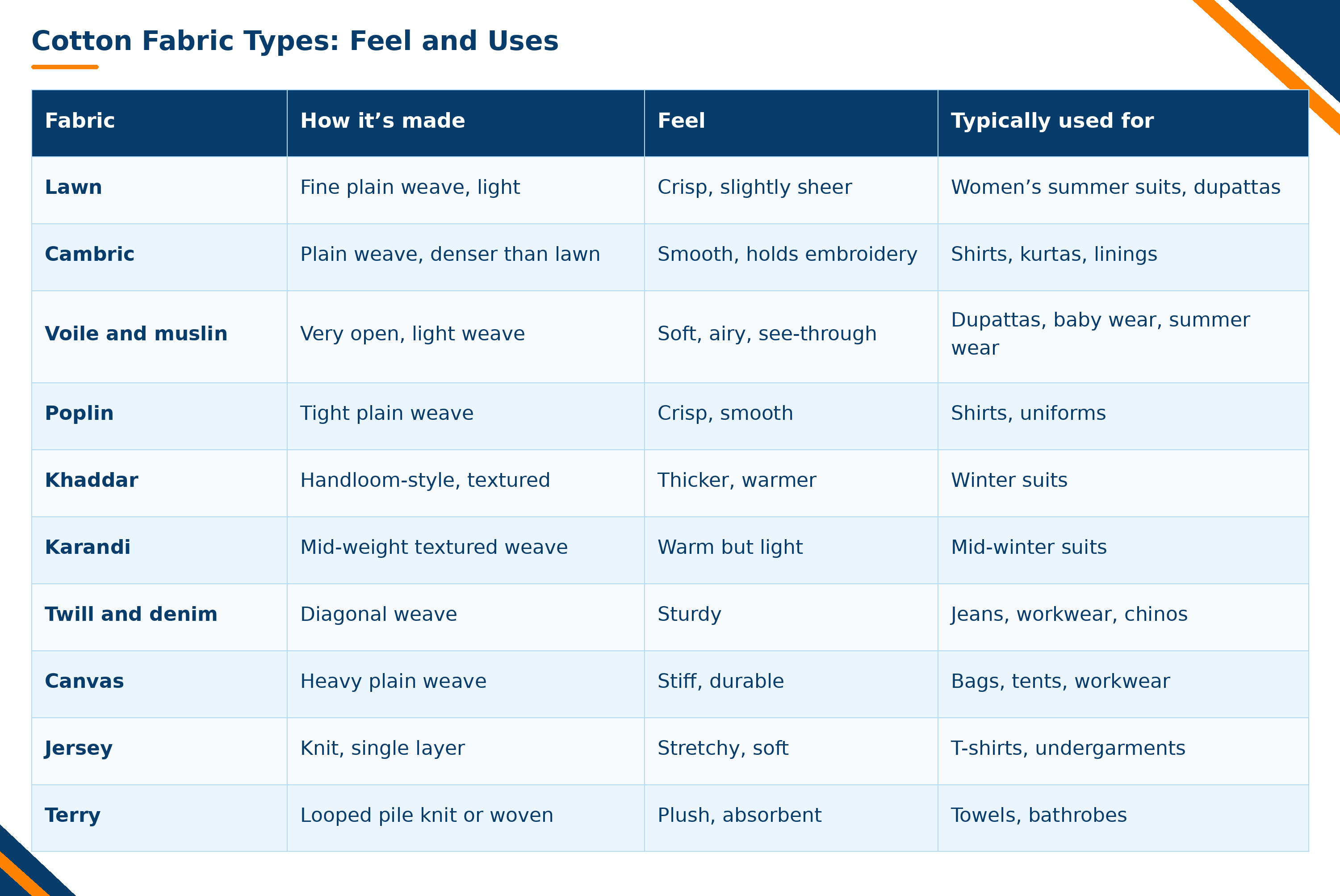
Names on shop labels are not a reliable guide to fibre composition.
“Wash and wear” may contain polyester or other blends, while CVC generally refers to a cotton-rich blend.
Ask for the actual percentages rather than assuming either term means pure cotton.
Pure Cotton Fabric: How to Tell the Real Thing
Pure cotton means the fabric contains 100% cotton fibre. A label is a useful starting point, but phrases such as “cotton feel” and “cotton-rich” do not mean the same thing.
For significant orders, request a fibre-content report or independent testing.
1) Touch and Look: Texture, sheen, and surface irregularities can offer clues, but finishes and fabric construction can make different fibres look similar.
2) Crumple it: Cotton often creases readily, but some treated cotton fabrics resist wrinkles and some non-cotton fabrics crease too.
3) Water Drop: Absorption can help compare samples, but coatings and finishes affect the result, so this is not a reliable fibre-identification test.
4) Burn Behaviour: Trained textile staff may use controlled fibre identification methods, but home flame tests carry fire risk and cannot reliably distinguish cotton from other cellulosic fibres.
5) Fibre Testing: For a bulk order or a disputed label, request a laboratory fibre-composition report using an appropriate method.
Cotton, linen and viscose are all cellulose-based fibres and can behave similarly in simple burn tests.
That is why a quick demonstration should not be treated as proof of a 100% cotton claim.
A supplier specification and, where needed, independent fibre analysis are more dependable.
Do not burn fabric at home to verify its composition. If the material is expensive or intended for regulated use, ask for documented test results.
Organic Cotton Fabric: What the Label Should Show
Organic cotton is grown under an organic production standard, but an “organic” claim on finished fabric needs traceability through processing.
Under GOTS labelling rules, the “organic” grade generally requires at least 95% certified organic fibres; “made with organic materials” has a lower threshold.
Check the current standard, certifier and licence details rather than relying on a tag alone.
For mills sourcing organic cotton, certification should apply to the specific fibre lot.
Ask for transaction or scope documentation where relevant and check the actual fibre specifications before ordering.
The same caution applies to organic cotton yarn. The listing mentions certifications subject to the supplier, so do not assume every lot has identical certification or composition.
Cotton Fabric in Pakistan: The Crop Behind the Cloth
Pakistan has a large textile industry, but locally grown cotton volume does not always meet mill demand.
That makes imported fibre part of the supply picture.
Export values, cotton arrivals, and mill consumption use different reporting periods and sometimes different bale definitions, so compare figures only when their sources and units match.
Crop estimates change through the season.
For current production and arrivals, consult the Pakistan Cotton Ginners Association and USDA crop reports, noting the publication date and the bale-weight definition.
Avoid treating an early forecast as a final harvest total.
Staple length helps buyers compare raw cotton.
Zarea groups shorter, medium and longer-staple options separately, but actual grade and suitability depend on measured fibre properties, contamination, moisture and the mill's spinning requirements.
Request current quotations rather than relying on older per-maund figures.
For everyday spinning applications, mills may compare medium staple cotton with other grades.
Ask for the staple-length report, cleanliness and minimum order before choosing a supplier.
Finer yarns may call for longer fibre, depending on the count and spinning system.
Zarea also lists long staple cotton, although its bulk-order terms make it more relevant to industrial buyers than individual fabric shoppers.
From Fibre to Cloth: How Cotton Fabric is Made
The route is longer than most people think. Bolls are picked and ginned to separate fibre from seed.
Spinning mills clean, card, and sometimes comb the fibre, then spin it into yarn. Weaving or knitting makes greige (unfinished) fabric.
After that, the cloth is bleached, dyed, or printed and finished, and each step adds cost.
Spinning method matters as much as the fibre label.
Combed ring-spun yarn is often selected for a smoother finish, while open-end yarn can be a practical option for particular fabric constructions and cost targets.
Compare strength, evenness and yarn count for the intended end use rather than assuming one method is universally superior.
How much does the raw fibre contribute to a metre of cloth?
The table below uses a hypothetical cotton input price of Rs 225/kg, widths of 44 or 59 inches, and an assumed 15% fibre-processing loss.
It is an illustrative calculation, not a verified current quotation or a complete manufacturing cost.
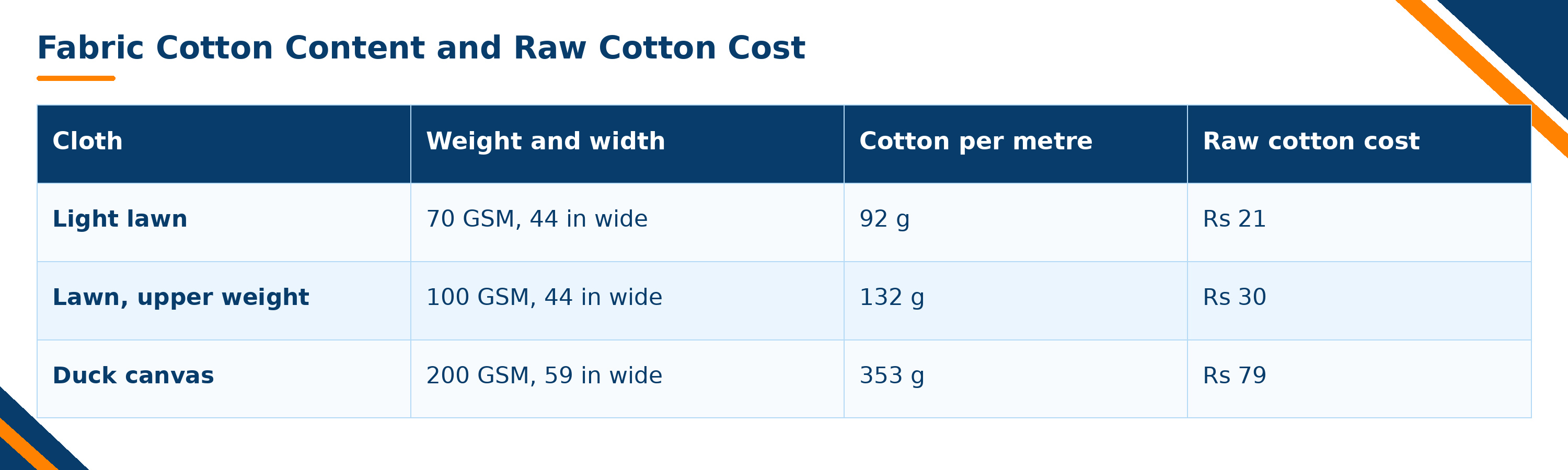
On those assumptions, raw fibre accounts for about Rs 21-30 in a metre of light lawn.
Spinning, weaving, dyeing, printing, finishing, waste, transport, and retail margins all add to the final price.
The fibre calculation helps explain cost structure; it does not establish a standard market margin.
Cotton Fabric Price Per Meter in Pakistan
Fabric prices change with width, weave, finish, brand, and season.
The following ranges are indicative examples carried forward from the original 2026 draft, not independently verified live quotations.
Compare like-for-like fabrics and confirm current prices before using them in a purchasing decision.
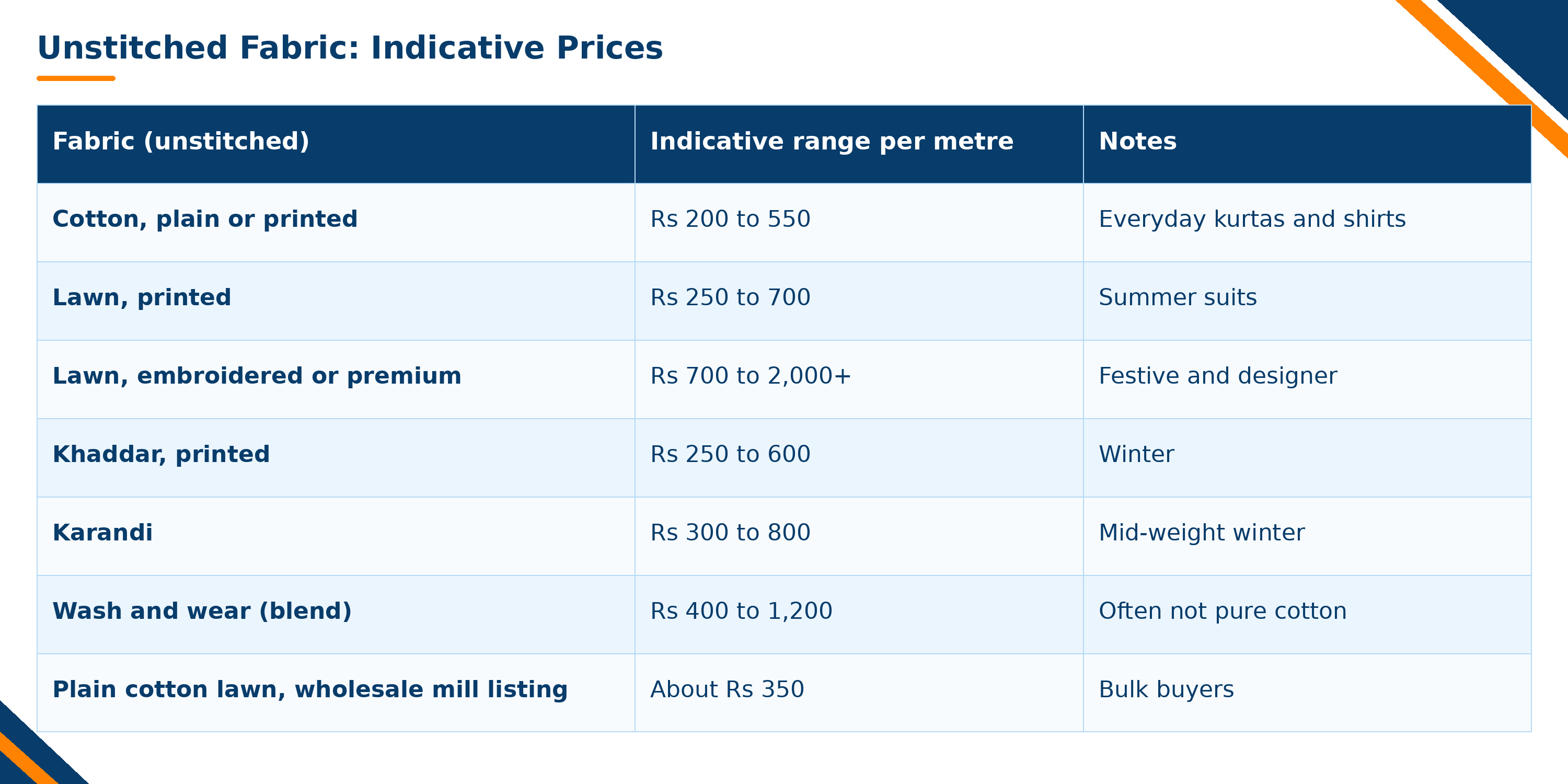
A men's unstitched outfit may require roughly 4.5-5 metres, depending on garment style, fabric width and the tailor.
At Rs 200-550 per metre, that works out to approximately Rs 900-2,750 for cloth alone.
Women's outfits vary even more by cut and whether a separate scarf or lining is included. Ask the tailor for the actual fabric requirement before buying.
International wholesale prices are not directly comparable with local retail prices unless fabric width, composition, finishing, order quantity, shipping, and exchange-rate assumptions are the same.
Treat export quotes and shop prices as different markets.
Where Cotton Fabric is Used
Cotton is a general-purpose fibre, so the uses are broad.
1) Clothing: Shalwar kameez, kurtas, shirts, T-shirts, underwear, baby wear and jeans.
2) Home Textiles: Bedsheets, pillow covers, curtains, towels and quilts.
3) Workwear and Uniforms: Poplin, twill and canvas for hospitals, schools and factories.
4) Medical and hygiene: Gauze, bandages and cotton wool, valued for absorbency.
5) Industrial: Bags, tents, filters and wiping cloths.
Climate decides most choices. Lawn and cambric suit heat, khaddar and karandi suit winter, and heavy canvas suits work that has to survive.
Each end use also has a typical yarn count and weave, which is why mills match yarn to product.
Choosing, Washing and Caring for Cotton
Before buying, check the fibre-content label, GSM, usable width, weave and colour consistency.
If the fabric will be stitched, ask about shrinkage and colourfastness; pre-wash a sample where appropriate.
A higher price or heavier weight is not proof of better quality.
Follow the care label first. Many cotton fabrics can be washed in cool or warm water, but dyed, printed and blended fabrics may need gentler treatment.
Dry thoroughly before storage and avoid prolonged high heat when ironing.
Buying Cotton, Yarn or Fabric for a Business
For a boutique, tailoring unit or mill, a useful quotation starts with a clear specification: fibre content, yarn count, GSM, width, quantity and delivery location.
Request a sample and compare quotes on equal terms. A guide to wholesale suppliers in Pakistan covers supplier checks for larger orders.
Zarea mainly lists cotton fibre and yarn for business purchasing, not ordinary retail fabric by the metre.
If you are new to bulk sourcing, its business-to-business marketplace explains how procurement differs from shopping for a single garment.
Before confirming a bulk order, ask for a written specification, test results where appropriate, delivery terms and the process for handling off-specification material.
A sample approval and a clear quotation can prevent more problems than an attractive headline price.
Check minimum order quantities and transport charges as part of the total cost.
FAQs
Is Cotton Fabric Good For Summer?
Yes. Lightweight, loosely constructed cotton fabrics such as lawn, voile, and cambric can feel comfortable in hot weather.
In humid conditions, cotton may stay damp longer than some alternatives, so fabric weight and airflow matter.
Which Cotton Fabric is Best in Pakistan?
It depends on the use. Lawn and voile suit light summer clothing; poplin is useful for shirts; heavier khaddar and canvas serve different needs.
Compare fibre content, weave, GSM, and finish instead of relying on the fabric name alone.
What is the Price of 1 Meter of Cotton Fabric in Pakistan?
The indicative ranges in this guide are Rs 200-550 per metre for basic cotton and Rs 250-700 for printed lawn, but these are not verified live prices.
Width, quality, finish, and brand can change the quotation substantially.
Which Cotton is Pure Cotton?
Pure cotton is fabric made entirely from cotton fibre. A clear composition label and supplier documents are useful checks; for an important order, independent fibre-content testing offers stronger assurance than touch or a home burn test.
Wrap Up
Cotton fabric is not one uniform material. Fibre length, yarn count, weave, weight and finishing explain why two pieces labelled “cotton” can feel and perform differently.
Check the composition and specifications before comparing prices, especially for bulk purchases.
Use the price table as an indicative reference, and request current, comparable quotations before buying.