Wheat Straws | The Sustainable Resource Transforming Agriculture and Industry
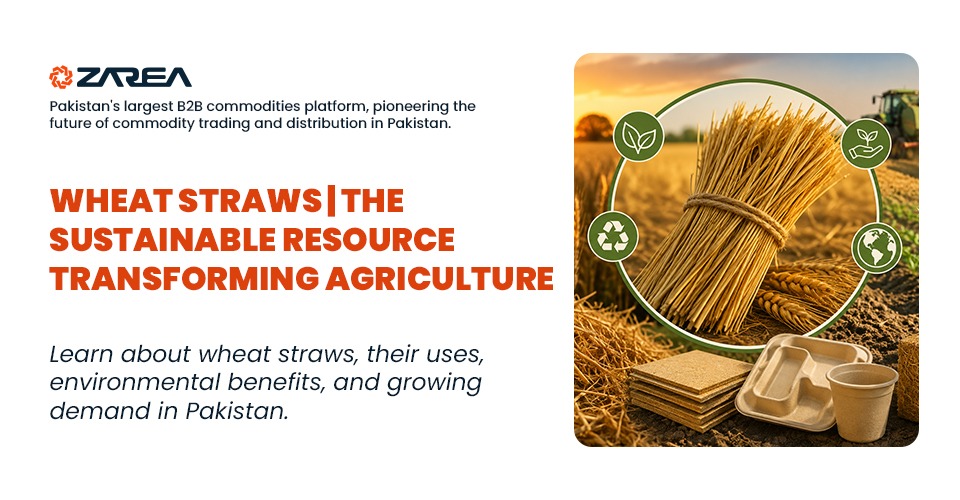
Learn about wheat straws, their uses, environmental benefits, and growing demand in Pakistan. Discover how natural wheat straws support sustainable agriculture, livestock, and renewable industries.
Wheat Straws in Pakistan:
In every wheat harvest, the golden grain frequently takes center stage. Despite the fact that it sustains economies worldwide, feeds millions, and fills silos. Once this valuable grain has been gathered. Wheat straw is another important resource that is still present in the fields. It used to be thought of as nothing more than agricultural waste. However, wheat straw is increasingly acknowledged as an eco-friendly and adaptable material. It may be used in anything from bioenergy and animal feed to environmentally friendly packaging and buildings.
As the globe moves toward more environmentally friendly options. Similarly, natural wheat straws are starting to play a significant role in the circular economy. This is because wheat is one of the most significant crops in Pakistan. Therefore, wheat straw is becoming more and more important to farmers. Same as, it's also play an important role in businesses, and environmental sustainability.
Let's examine why Pakistani wheat straws merit far greater consideration. While it is opposed to what they often receive.
What Are Wheat Straws?
The dry stalks that remain after wheat grains are harvested are known as wheat straws. In simple words, wheat straw is the material that left behind after the grain has developed and been removed from it. In contrast to hay which is gathered when crops are still green for animal feed.
These straws are dense, fibrous, lightweight, and high in lignin and cellulose. They are valuable in many different industries because of their texture.
Straw is produced in large quantities with each wheat harvest. Rather than disposing of it as rubbish. As a result, it is currently regarded as a valuable agricultural by-product in many nations. As a result, it has advantages for business and the environment.
Read More: Strengthening the Wheat Value Chain
Why Wheat Straw Matters?
Agriculture is now more than only the production of food. Because of this, modern farming places a strong emphasis on optimizing the value of each agricultural component.
Natural wheat straw is particularly crucial in this situation.
Must avoid setting agricultural leftovers on fire. Because they increase greenhouse gas emissions and air pollution which is harmful for the environment. Additionally, farmers may turn wheat and straw into profitable goods if treated well. While they are also moving forward and preventing pollution in the environment.
This change is a significant step toward the future of sustainable agriculture farming. However, this change is also contributing to effective resource management.
Uses of Wheat Straws:
The adaptability of wheat straw is one of its greatest benefits. As a result, it now has many uses in the industry today. Where it also serves in agriculture, and renewable energy.
1) Livestock Feed
Although wheat straw contains less nutritional value than green fodder. Yet it remains an important feed source for cattle, buffaloes, sheep, and goats.
Farmers often mix straw with:
1) Molasses
2) Silage
3) Green fodder
4) Mineral supplements
This creates balanced feed during seasons when fresh forage is limited.
2) Animal Bedding
One of the most common uses of wheat straws is bedding for livestock.
Its dry and absorbent nature helps:
1) Keep animals comfortable
2) Maintain hygiene
3) Reduce moisture
4) Improve animal welfare
Poultry farms, dairy farms, and horse stables frequently rely on wheat straw for bedding.
3) Bioenergy Production
As renewable energy gains importance these days. While natural wheat straws are increasingly used as biomass fuel in many fields.
They can generate:
1) Electricity
2) Steam
3) Industrial heat
4) Biofuels
5) Biogas
The biomass plants convert it into clean energy. Instead of burning straw openly in the fields. Because it reduces pollution while creating economic value.
4) Organic Compost
Wheat straw decomposes naturally and enriches soil because of organic matter.
Therefore, farmers often use it in composting to improve:
1) Soil fertility
2) Moisture retention
3) Microbial activity
4) Long-term productivity
Healthy soils produce healthier crops. While it also reduces dependence especially on chemical fertilizers.
5) Mushroom Cultivation
Many commercial mushroom farms use wheat straw as their primary growing medium.
This is because its fibrous structure provides ideal conditions for mushroom production. While it's also creating another profitable opportunity for farmers.
6) Sustainable Packaging
The global movement away from plastic has increased demand for biodegradable materials.
Therefore, today, natural wheat straws are being transformed into:
1) Paper products
2) Packaging materials
3) Disposable food containers
4) Eco-friendly shopping bags
These products decompose naturally. Therefore they are helping reduce plastic pollution.
7) Construction Materials
Innovation has expanded wheat straw into the construction sector.
Compressed straw panels are now used in:
1) Insulation
2) Wall panels
3) Eco-friendly housing
4) Sustainable building materials
The products that are made from wheat straw provide excellent thermal insulation. While they reduce construction's environmental impact.
Environmental Benefits of Wheat Straw:
The environmental advantages of wheat straw are very significant in many fields.
Reduces Air Pollution
Open-field burning of residue releases harmful smoke and greenhouse gases.
The utilizing wheat straw commercially helps reduce air pollution. This is because it protects public health.
Supports Circular Agriculture
Every part of the wheat harvest becomes more valuable economically.
Thus, nothing is wasted during the harvesting process.
Reduces Carbon Emissions
Replacing fossil fuel-based materials with renewable wheat straw products. This process lowers overall carbon emissions.
Improves Soil Health
Soil organic matter is increased when processed straw is returned to the fields as compost. Long-term agricultural production is also improved by this procedure.
Wheat Straws in Pakistan:
The demand for wheat straws in Pakistan continues to grow. This is because the country's large agricultural sector is evolving very fast.
Punjab remains Pakistan's largest wheat-producing province so far. That's why it generates millions of tonnes of straw every harvest season.
Traditionally, wheat straw has been used primarily for livestock feeding. However, new commercial opportunities for wheat straw are expanding its market potential.
Wheat straw supports industries today such as:
1) Dairy farming
2) Poultry farming
3) Biomass energy
4) Organic fertilizer production
5) Mushroom cultivation
6) Paper manufacturing
As awareness increases, farmers are discovering that wheat straw is a highly valuable item. So, it becomes an additional source of income rather than simply leftover residue.
Challenges Facing Wheat Straw Management:
Despite its value, wheat straw faces several challenges that remain.
Crop Burning
Many farmers still burn their wheat straw. Because of limited collection facilities for straw or the lack of commercial buyers.
This bad habit contributes significantly to environmental pollution.
Transportation Costs
Wheat straw has a low density. This straw's property makes it difficult to transport while being relatively expensive over long distances.
Therefore, improved logistics and regional collection centers can address this issue.
Limited Processing Facilities
Pakistan still requires great investment in straw-based industries. This may include biomass plants and sustainable packaging manufacturers for a better future.
Thus, expanding the processing infrastructure would unlock additional economic opportunities.
Market Awareness
Many farmers remain unaware to this day about wheat straw's commercial value.
Therefore, farmer education programs can encourage better utilization and improve rural incomes.
The Role of Technology:
So, today's technology is changing the way agricultural residues are managed.
Further, modern equipment now allows farmers to:
1) Bale wheat straw efficiently
2) Compress straw for transportation
3) Improve storage quality
4) Reduce harvesting losses
Digital agricultural platforms are also connecting farmers directly with buyers. While these advanced platforms are also creating transparent marketplaces for agricultural by-products.
This improves price discovery while reducing waste across the supply chain.
Building a Sustainable Wheat Supply Chain:
Companies involved in agricultural commodities are increasingly recognizing the wheat straw value. Because its value extends beyond grain itself.
An efficient wheat supply chain considers every stage of wheat cultivation. Whether it's from cultivation and harvesting to storage. Or wheat transportation and its by-product utilization, also.
Zarea plays a significant role in Pakistan's wheat procurement ecosystem. This represents an opportunity to support a more sustainable agricultural model. Via enhancing market access, bolstering logistics, and promoting better use of agricultural by-products like rice husk etc. Thus, businesses may assist farmers in making the most of each crop.
Such efforts contribute to a more resilient agricultural economy. While these efforts also support environmental sustainability.
The Future of Natural Wheat Straws:
The future of natural wheat straws are looks like exceptionally promising especially in Pakistan.
Biodegradable and renewable materials demand continues to grow in Pakistan. That's why governments, businesses, and consumers prioritize sustainability in this field.
Innovations in bio-composites and renewable energy are growing in the next way. Same as sustainable packaging and eco-friendly construction fields are creating entirely new markets for wheat straw.
Those countries who invest in agricultural innovation are transforming crop residues into valuable industrial resources.
Pakistan has tremendous potential to become a regional leader in wheat straw utilization. Because Pakistan has vast wheat production.
Final Thoughts:
Wheat straws are no longer viewed as simple agricultural leftovers. Because they have evolved into valuable natural resources. While these resources support sustainable farming and renewable energy. Moreover, livestock production and environmentally friendly industries are also parts of this evolving industry.
The growing demand for natural wheat straws demonstrates how agriculture can contribute to different fields. Same as economic development and environmental conservation also demonstrate. The opportunities are especially significant for wheat straws in Pakistan. With better infrastructure and modern processing technologies, it's possible to do many things with this product! Therefore, strong market linkages and wheat straw can become an important driver of rural income and green innovation.
As the world embraces so, sustainable solutions modify. Same as wheat straw stands as a much powerful reminder of a better future. That even the simplest by-products of agriculture can create long lasting value. What was once left behind in the field is now helping build a cleaner world. That's why one harvest at a time leads to a more resource-efficient future.
Refrence: Agri Max Pakistan - Wheat Straw