Does Seed Cycling Actually Work? What Science Says
Explore the real science behind seed cycling. Learn how it affects your hormones and whether it's truly worth adding to your diet.
Introduction:
You have probably run into the seed cycling method concept. If you haven't spent even five minutes scrolling through wellness social media lately. Because influencers and holistic wellness practitioners claim to operate in this method. They believe that eating a precise rotation of seeds throughout the month is natural and healthy habit. While this habit is also a foolproof way to fix irregular periods and clear up hormonal acne. Additionally this habit also eases your PMS and even boosts your fertility in the majority of cases.
But is this crunchy dietary trend a legitimate and biologically-backed breakthrough? Or is this trend just another piece of well-marketed internet hype? In this post we will try to find answers.
Let’s take a look at the actual clinical evidence, break down the biology of how hormones fluctuate, and figure out if seed cycling benefits are rooted in science or myth.
What is Seed Cycling?
Basically, seed cycling is a naturalopathic dietary practice in medical. While this practice involves eating specific seeds at different times of your menstrual cycle. Because it helps to optimize your body's estrogen and progesterone levels.
The standard protocol for this diet is built around women's classic 28-day menstrual cycle. While it is cleanly divided into two major phases.
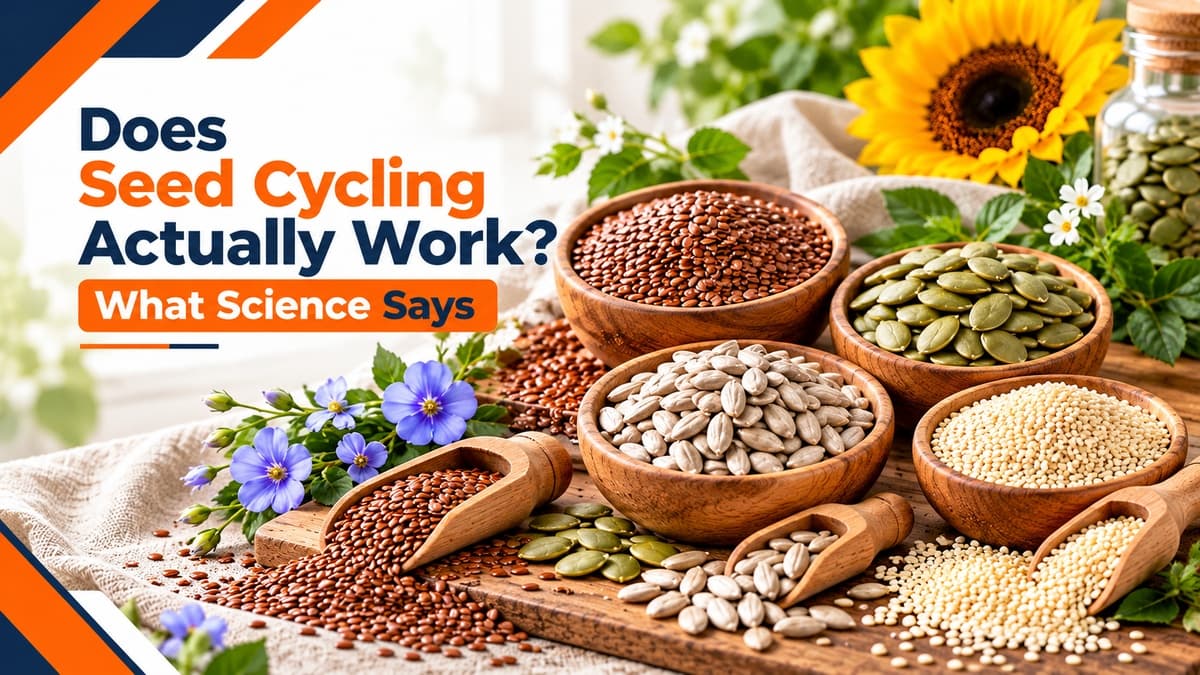
1) The Follicular Phase (Days 1–14): This phase starts on the first day of your period and ends on ovulation. So, you should eat one tablespoon of raw 'ground' flax seeds and one tablespoon of pumpkin seeds daily. The goal here is to support estrogen levels.
2) The Luteal Phase (Days 15–28): The second phase starts right after ovulation until your next period begins. You must switch to one tablespoon of raw 'ground' sesame seeds and one tablespoon of sunflower seeds daily. This phase especially focuses on supporting your prostate levels.
Practitioners often recommend syncing the schedule with the moon phases. This phase starts with a flax and pumpkin seed diet at the new moon. This schedule is for individuals who are navigating post-menopause or who don't have a regular period cycle.
Did Seed Cycling Actually Work, or Is It Just a Myth?
To answer this directly: The structured rule of "cycling" seeds to dynamically alter human hormone levels is largely a myth.
Currently, there are no authentic human clinical trials on this schedule. Or there are no large-scale scientific studies that prove diet magic. Therefore, the rotation of these four specific seeds in a 14-day pattern does not perfectly regulate or balance human hormones.
The idea is that your own endocrine system recognizes a calendar date. Or your system shifts its requirements precisely on the day 15. This is because you switched from pumpkin to sunflower seed which is an oversimplification of human biology. Furthermore, real women's cycles are messy ones. Because a normal and healthy period cycle can range anywhere from 21 to 35 days. This means a rigid 14-day template naturally fails to sync with many individuals' biological reality.
However, labeling the cycle is a myth that throws the baby out with the bathwater entirely. While the synchronized cycling aspect lacks evidence. Additionally the individual ingredients are deeply therapeutic in themselves. On the other hand, the nutrients found within these seeds are proven to support overall metabolic and reproductive health. That's why this diet cycle is likely why many people report feeling better when they try it.
How Does Seed Cycling Work? (Causes of Hormonal Imbalance):
First, we have to look at what causes hormonal imbalances in women's bodies. Because it will help us understand why people turned to the seed cycling method at first. Your endocrine system is a highly sensitive network of glands. Therefore this system relies on a delicate feedback loop between your brain and your ovaries.
A few common modern culprits usually drive the cycle when things go wrong.
1) Chronic Stress: High cortisol (the stress hormone) directly disrupts your hypothalamus in some cases. While it's blocking the signals that tell your body to ovulate or produce progesterone.
2) Insulin Resistance: High insulin levels can cause women's ovaries to produce too much testosterone. This condition throws off women's estrogen-to-progesterone ratio. Additionally this condition is common in PCOS.
3) Nutritional Deficiencies: Your body requires raw building blocks. This includes things like healthy fats, vitamins, and minerals. These building blocks help you manufacture and metabolize your hormones efficiently in your body.
Proponents of seed cycling argue that you can combat these root causes and lower inflammation. Because this cycle provides your body with specific and targeted nutrients at precise times. Additionally it also provides the exact raw materials your endocrine system needs to self-correct.
How Seeds Influence Hormones:
The nutritional profiles of these four seeds show exactly why they can influence your systemic health. Even though the a strict 14-day schedule isn't back in a clinical trial.
1) Flaxseeds
Flaxseeds are the richest lignan dietary source. While lignans are a type of phytoestrogen (plant-based estrogen). Lignans have a unique adaptive quality that enhances your inner-body health. Your body can bind to estrogen receptors and block stronger ones if your body’s natural estrogen levels are too high. These kinds of estrogen are more harmful than estrogen ones. They can gently stimulate the receptor if your estrogen levels are too low. Therefore, flaxseeds are also packed with alpha-linolenic acid (ALA). This acid is a plant-based omega-3 fatty acid that lowers your body's systemic inflammation.
2)Pumpkin Seeds
Pumpkin seeds are dense in the zinc mineral. Zinc is a critical mineral that is required for the development of healthy eggs. While zinc plays a foundational role in progesterone production during the second half of your period cycle. They are also rich in magnesium as well. Because magnesium helps you regulate your body's cortisol levels and calms the nervous system.
3) Sesame Seeds
Sesame seeds are highly concentrated in lignans like flax seeds. While these seeds do help you to keep estrogen levels stable during the luteal phase. Especially when prostate level is supposed to take the lead. These seeds also supply vital calcium and zinc to support overall metabolic function.
4) Sunflower Seeds
Sunflower seeds are packed with vitamins E and selenium. Vitamin E is a powerful fat-soluble antioxidant that has been linked in preliminary studies to improve luteal blood flow. While this vitamin also helps with healthy progesterone production in women's bodies. Selenium is crucial for the liver detoxification function. Additionally, it also helps your body to break down and safely excrete used hormones.
Does Seed Cycling Balance Hormone Levels?
The scientific verdict is nuanced: Eating these seeds will absolutely support your hormonal health, but the "cycling" mechanism itself isn't doing the heavy lifting.
If you experience improved PMS symptoms, clearer skin, or a more regular cycle after starting this routine, it is highly likely due to a few non-magical, highly scientific reasons:
1) Increased Nutrient Density: You replaced processed snacks or empty calories with massive doses of essential minerals (zinc, magnesium, selenium), fiber, and healthy fats that your endocrine system desperately needed.
2) Blood Sugar Stabilization: The fiber and healthy fats in a daily dose of seeds slow down digestion. This prevents blood sugar spikes, lowers insulin, and indirectly stabilizes reproductive hormones.
3) Improved Estrogen Cleansing: The high fiber content in flax and sesame seeds supports a healthy gut microbiome and regular bowel movements, which is the primary path your body uses to clear out excess, metabolized estrogen.
How to Safely Try It:
If you want to experience the genuine seed cycling benefits for your overall health, you don’t need to stress over the perfect calendar day. Instead, focus on these optimal preparation habits:
1) Always Eat Them Ground: Your body cannot break down the tough outer hulls of whole flax or sesame seeds. Buy them whole and grind them fresh in a coffee grinder to unlock their nutrients.
2) Keep Them Cold: The polyunsaturated fats in milled seeds oxidize and spoil quickly when exposed to light and heat. Store your ground seeds in an airtight container in the fridge or freezer.
3) Be Consistent: Don't stress if you mix up the seeds or eat pumpkin seeds during your luteal phase. The ultimate goal is to get a diverse, rich blend of healthy seeds into your daily diet via smoothies, oatmeal, or salads consistently over several months.
The Bottom Line:
Does seed cycling work? Yes, as a nutritional strategy, but no, not as a magical hormonal switch. You don't need a strict, rigid timeline to reap the rewards. Incorporating flax, pumpkin, sesame, and sunflower seeds into your daily diet provides your body with the fundamental nutritional tools it needs to find its own natural balance.
Frequently Asked Questions:
How long does it take for seed cycling to work?
Because seed cycling relies on gradual nutritional support rather than instant medication, it typically takes three to four consistent menstrual cycles to notice noticeable improvements in your skin, energy, or PMS symptoms.
Can seed cycling fix irregular periods?
Seed cycling provides essential fatty acids and minerals like zinc and magnesium that support the reproductive system, which can help regulate your cycle over time. However, if your irregular periods are caused by severe underlying clinical conditions like polycystic ovary syndrome (PCOS), extreme stress, or thyroid disorders, seed cycling alone will not fix the root cause.
Can you start seed cycling if you don't have a period?
Yes. If you have an absent period (amenorrhea) or are post-menopausal, practitioners suggest following the phases of the moon to establish a routine. You consume flax and pumpkin seeds starting on the new moon (simulating the follicular phase), and switch to sesame and sunflower seeds on the full moon (simulating the luteal phase).
Should the seeds be raw or roasted?
It is highly recommended to use raw, unroasted seeds. High heat from roasting can degrade the delicate, heart-healthy polyunsaturated fats and alter the beneficial plant compounds (lignans) required to support your health.
Can you do seed cycling while on birth control?
You can safely eat these seeds while on hormonal birth control, but it will not alter your cycle. Hormonal contraceptives fully control your endocrine fluctuations and prevent ovulation, meaning the theoretical mechanism of "balancing" your natural hormonal peaks and valleys through food will not apply.
What happens if you skip a day or mix up the seeds?
Missing a day or accidentally eating the wrong seed mix will not ruin your progress. The human body relies on your total nutrient intake over time rather than a single day’s menu. The overall health benefits come from the consistent, long-term intake of healthy fats, fiber, and trace minerals.